As we announced in an earlier news post, we are contributing to the AIRTuB-ROMI project. This project addresses a major challenge within the wind energy industry: the maintenance and inspection of offshore wind turbines. With the rapid expansion of offshore wind farms driven by the energy transition, developing efficient, safe, and cost-effective maintenance solutions is becoming increasingly important.
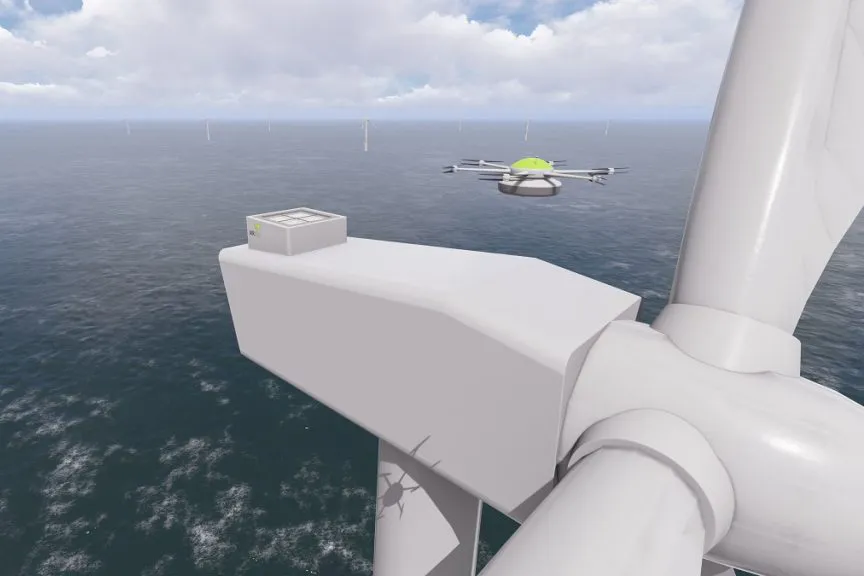
AIRTuB-ROMI focuses on developing autonomous systems that monitor and inspect the condition of wind turbine blades, making maintenance more predictable and less risky. Nest-Fly contributes to this initiative by developing and installing drone docking stations, which play a key role in these autonomous inspection processes. These docking stations are installed on Offshore High Voltage Stations (OHVS), from where the drones operate to inspect the turbines within the wind farm.
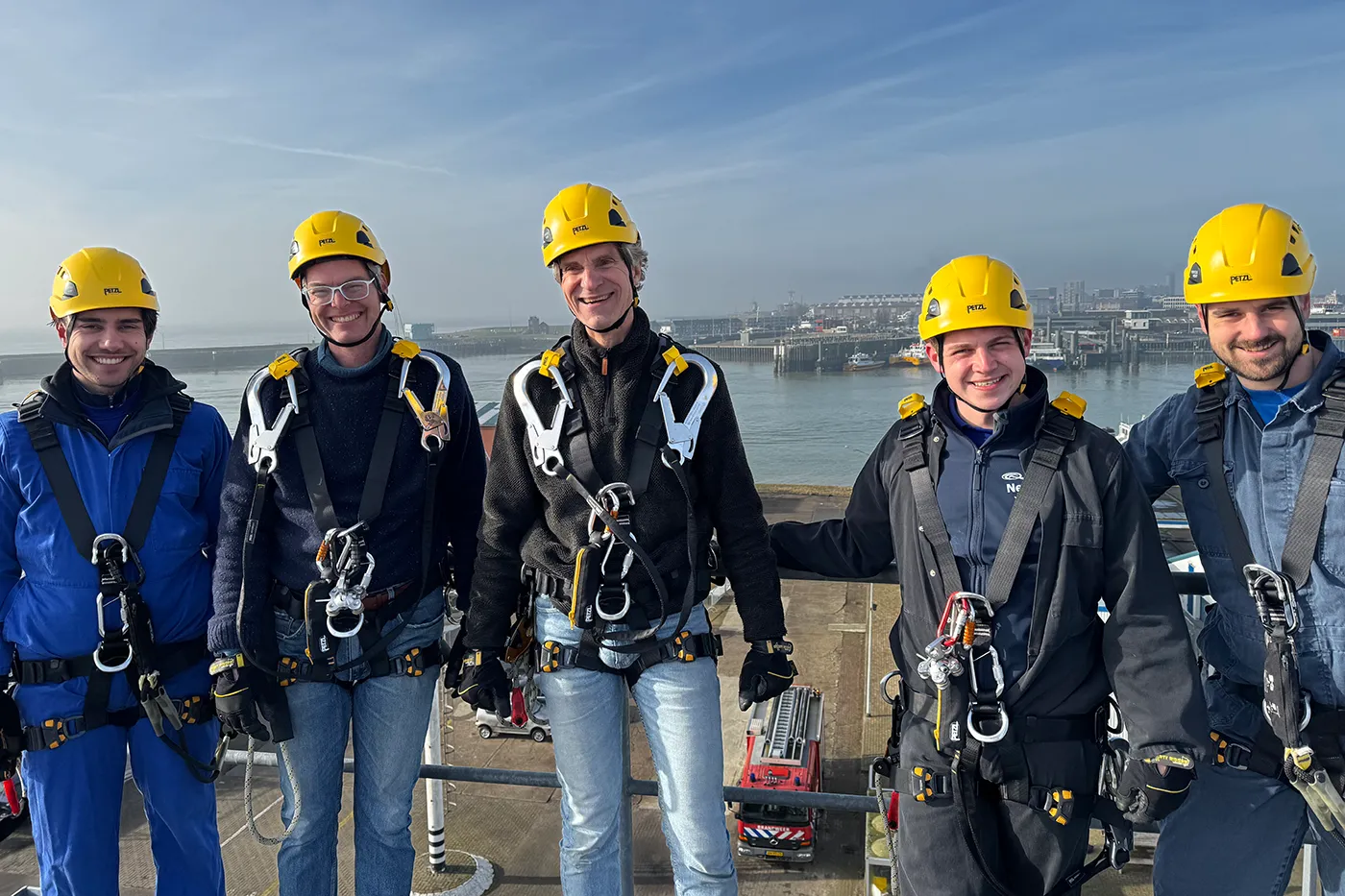
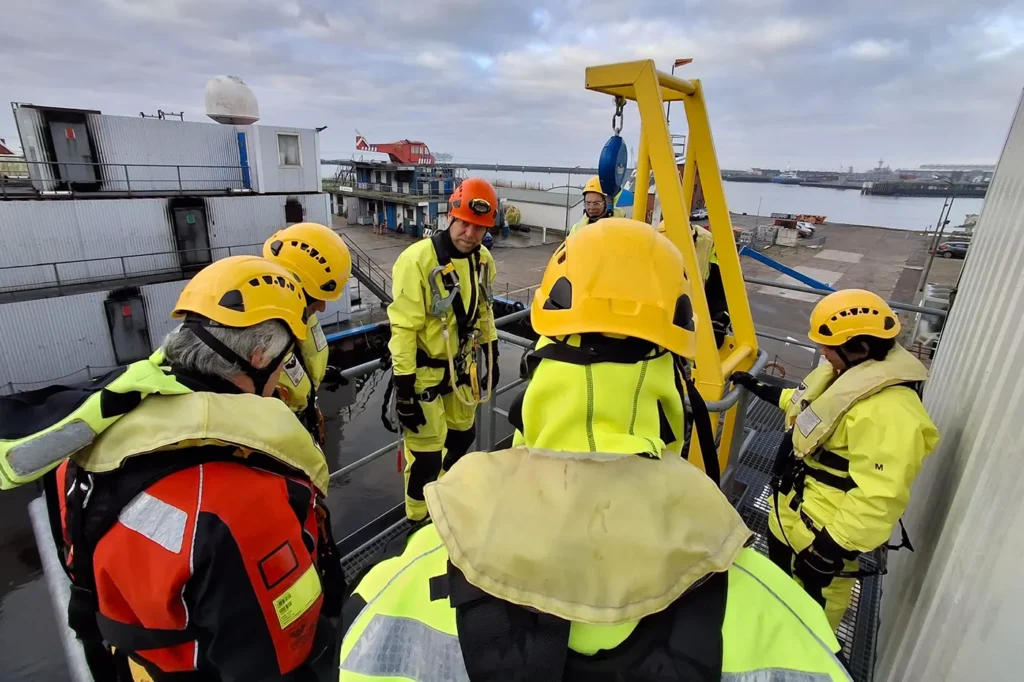
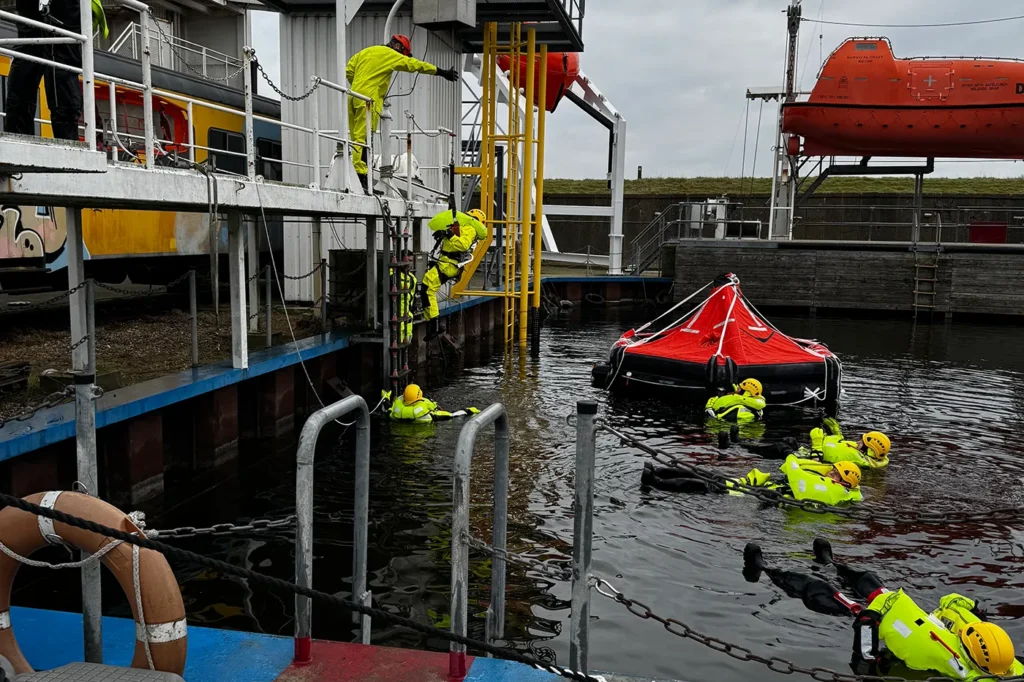
To work safely and effectively in offshore environments, specific training is required. That’s why Yves Lentfert and Thom Visschedijk from Nest-Fly completed an intensive training program at Safety Centre Zeeland, led by De Ruyter Training & Consultancy (DRTC) in Vlissingen. Over the course of a demanding week, they successfully completed the GWO (Global Wind Organisation) training.
The GWO sets global safety and training standards for professionals in the wind energy industry. Working in offshore wind farms involves unique risks — from extreme weather conditions to working at great heights and handling emergency situations. That’s why it’s essential for everyone in this sector to have the right knowledge and skills.
By obtaining four essential certificates, Yves and Thom now have the expertise required to work in this challenging environment:
Thanks to this certification, Nest-Fly can actively contribute to the AIRTuB-ROMI project and the implementation of autonomous inspection and maintenance systems within offshore wind farms. By equipping our team with the right expertise and skills, we ensure that we remain a valuable link in the development of efficient and safe inspection methods.
With these certifications, we are not only taking an important step forward in the AIRTuB-ROMI project but also strengthening our position within the wind energy industry. We remain committed to innovation and safety and look forward to expanding our contribution in future projects. Nest-Fly continues to grow — in both knowledge and impact — and we’re proud of the role we play in the evolution of sustainable energy.