In recent years, the world has seen a tremendous increase in investment in wind energy. Offshore wind farms have become a key pillar in the global transition toward sustainable energy. The number of offshore wind farms continues to grow — great news for a greener future. However, this rapid expansion also brings new challenges. Maintaining and inspecting wind turbines is a complex process, and as the number of turbines rises, it becomes essential to continuously monitor their performance and condition, and to act quickly whenever intervention is needed.
Inspecting wind turbine blades is one of the most critical and high-risk aspects of the maintenance process. Conducting inspections at sea is time-consuming, costly, and requires specialized technicians who often work under hazardous conditions. Moreover, the shortage of skilled technicians in the industry makes it difficult to carry out the necessary inspections quickly and efficiently. As the sector continues to grow and the number of turbines increases, maintaining offshore wind farms is becoming an ever greater challenge.
To address these challenges, the AIRTuB-ROMI project was established under the leadership of World Class Maintenance, with Eneco and Vattenfall as problem owners. The goal of this project is to transform the way we maintain offshore wind farms by developing autonomous systems for monitoring and inspecting wind turbines. The project focuses specifically on the use of advanced technologies such as drones and sensors, which can efficiently and safely monitor the condition of turbine blades — without requiring technicians to enter hazardous offshore environments.
Thanks to the technological innovations being developed within the AIRTuB-ROMI project, it will become possible to quickly and efficiently detect damage to turbine blades, propose repairs, and schedule maintenance. This will not only reduce operational costs but also improve technician safety and extend the lifespan of wind farms.
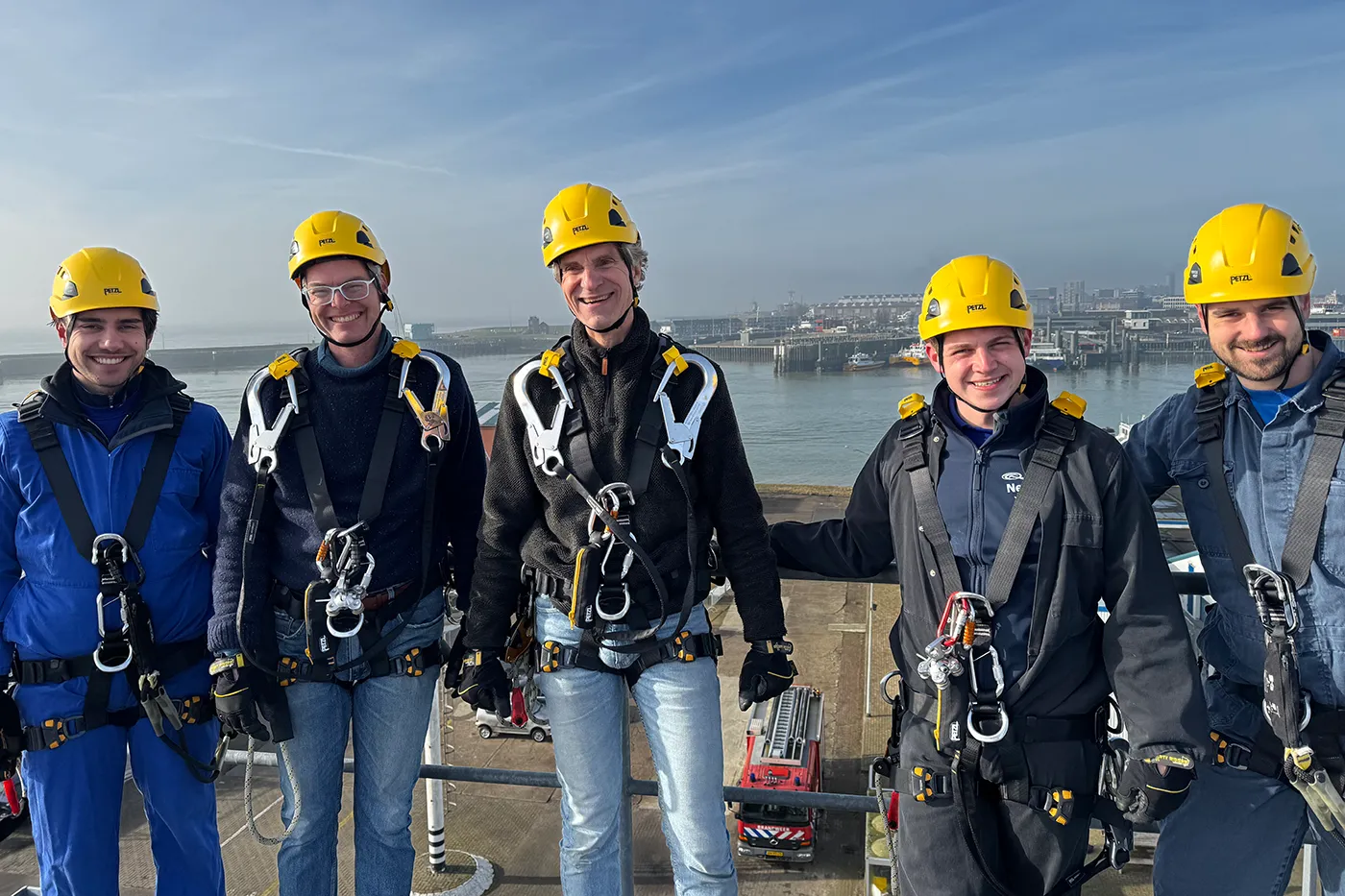
Nest-Fly is proud to be part of this ambitious project. Together with an impressive group of partners — including TU Delft, Vattenfall, Eneco, and World Class Maintenance — we’re working toward the future of offshore wind energy.
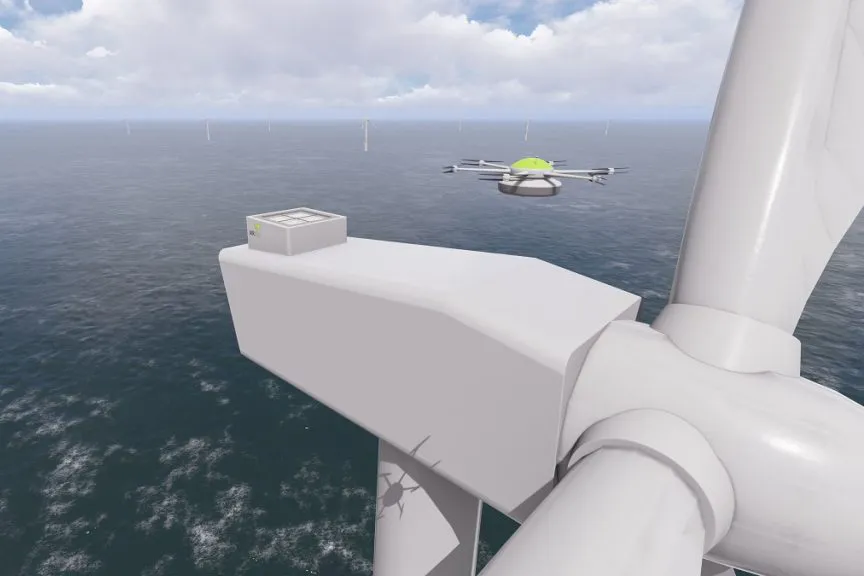
Our specific contribution to this project involves developing and installing drone docking stations on the Offshore High Voltage Stations (OHVS) of offshore wind turbines. These docking stations will serve as automated bases where drones can recharge and launch for blade inspections. By integrating this drone technology, the maintenance process can be simplified and accelerated.
Why this project matters for the future of wind energy
The AIRTuB-ROMI project represents a major step toward the future of offshore wind energy. By leveraging innovative technologies such as autonomous drones, we can make wind farm maintenance not only more efficient but also safer and more sustainable.
With our contribution to this project, we aim to support the sector in its growth and sustainability goals — and to develop the technologies that will power the wind energy of tomorrow.
At Nest-Fly, we believe that through collaboration and technological innovation, today’s challenges can be transformed into tomorrow’s opportunities. We’re excited to work alongside our partners to make a meaningful contribution to the future of offshore wind energy and the continued sustainability of our planet.